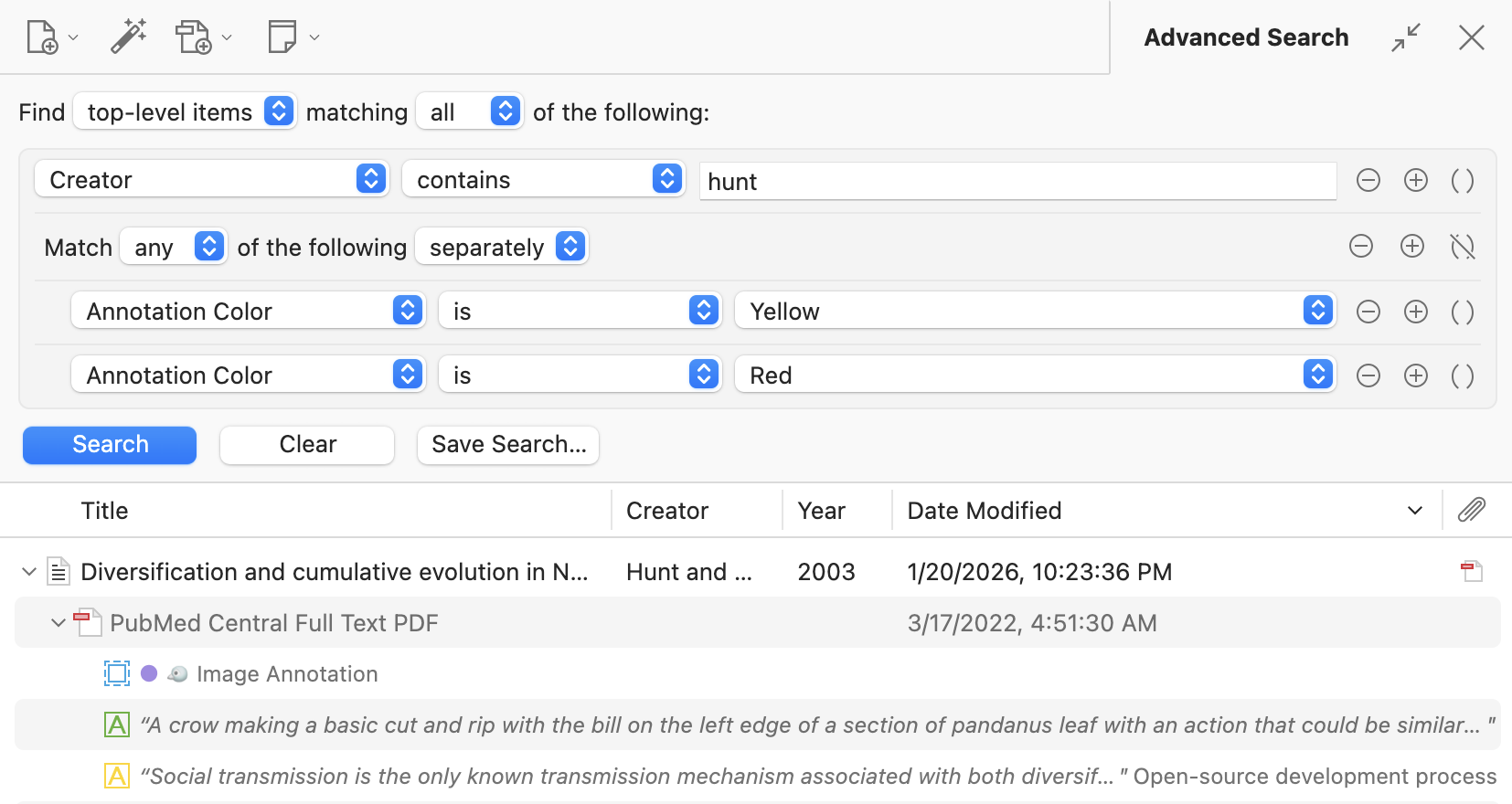
Zotero 8 is out... more user-friendly
-->文獻引用軟件 Zotero 及中文格式輸入介紹
✙ 本網頁旨在為華人神學生推介合用的神學及聖經研究資源。(Useful/recommended online theological and biblical study resources for [Chinese] seminarians.) ✙
In 40 Questions About Angels, Demons, and Spiritual Warfare, John Gilhooly provides a biblical and balanced perspective on the many issues surrounding the spiritual realm. Using a question-and-answer format, he explains spiritual warfare, angels and demons, the role of Satan, models and practices for spiritual warfare, and topics related to the occult. Beneficial as a comprehensive overview or as a reference guide to particular subjects, this volume provides concise but thorough answers to many ...
Regular price: $171.40 HKD
Save $171.40 HKD (100%)
Your Price: $0.00 HKD
In this valuable resource for pastors and students, celebrated scholar Mark Futato explains the nature of Hebrew poetry and the purpose of the Psalms. After outlining issues related to the proper interpretation of Israel’s songbook, he concludes with a sample of moving from interpretation to proclamation.
Regular price: $194.78 HKD
Save $132.50 HKD (68%)
Your Price: $62.28 HKD
The Dalai Lama once wrote that the object of human existence was to be happy. On the other hand, von Hugel wrote, “Religion has never made me happy; it’s no use shutting your eyes to the fact that the deeper you go, the more alone you will find yourself.” This small masterpiece by the late Fr. Herbert McCabe, OP steers a steady course between these two extremes.
Regular price: $116.84 HKD
Owned
This
new edition presents the most current Greek text, incorporating the
textual changes documented in the Editio Critica Maior volumes on Acts
(2017), the Gospel of Mark (2021), and Revelation (2025). As a result,
it differs from the fifth edition in well over 100 places. The text is
identical to that of the forthcoming 29th edition of the Novum
Testamentum Graece (Nestle-Aland), scheduled for release in 2026.
The
critical apparatus features clearly structured entries for all
significant textual variants. A well-written and accessible introduction
in English provides guidance for using this edition.
Editors: Hugh Houghton, Christos Karakolis, David Parker, Stephen Pisano, Holger Strutwolf, David Trobisch, and Klaus Wachtel.

Pages: 720 ISBN: 978-3-438-05310-7
Digital Logos Edition
This all-new edition of A Textual Commentary on the Greek New Testament uses the Greek text of the 29th edition of the Nestle-Aland Novum Testamentum Graece (NA29) and the 6th edition of the United Bible Societies' Greek New Testament (UBS6) and comments on all apparatus entries of UBS6 in concise and comprehensible language. The edition is also suitable for use with the Nestle-Aland, as the Nestle-Aland also contains all the apparatus entries of UBS6 (with a different selection of witnesses). In addition, a detailed introduction provides key information on New Testament textual tradition, basic principles of textual criticism, and guidelines for using the UBS Greek New Testament. The author is a member of the editorial committee for NA29 and UBS6 and is therefore ideally suited to explain the decisions made by the committee in its preparation of these critical editions.
The 2025 version replaces Bruce M. Metzger’s A Textual Commentary on the Greek New Testament, which has been regarded as the standard work for decades but is now outdated in terms of research history.
Hugh Houghton is Professor of New Testament Textual Scholarship and Director of the Institute for Textual Scholarship and Electronic Editing at the University of Birmingham.
•
Ships 12/26/2025
For those who own a tailor-made package of EVS' version of Logos, you have had a Chinese BDAG. If you still like the original BDAG, here you go for a discounted price: US$115.49 ~ HK$900
Digital Logos Edition
Described as an "invaluable reference work" (Classical Philology) and "a tool indispensable for the study of early Christian literature" (Religious Studies Review) in its previous edition, this new updated American edition of Walter Bauer's Wörterbuch zu den Schriften des Neuen Testaments builds on its predecessor's staggering deposit of extraordinary erudition relating to Greek literature from all periods. Including entries for many more words, the new edition also lists more than 25,000 additional references to classical, intertestamental, early Christian, and modern literature.
Perhaps the single most important lexical innovation of Danker's edition is its inclusion of extended definitions for Greek terms. For instance, a key meaning of episkopos was defined in the second American edition as overseer; Danker defines it as "one who has the responsibility of safeguarding or seeing to it that something is done in the correct way, guardian." Such extended definitions give a fuller sense of the word in question, which will help avoid both anachronisms and confusion among users of the lexicon who may not be native speakers of English.
Thanks to Frederick W. Danker's broad knowledge of Greco–Roman literature, as well as papyri and epigraphs, the new BDAG lexicon provides a more panoramic view of the world of Jesus and the New Testament. It incorporates new research, new information, and analyses while rendering translations into contemporary English. What is more, the Logos Bible Software version of this resource offers unprecedented search capabilities customized to this reference work. Can you continue doing Biblical study without the BDAG lexicon online?
Save even more on the BDAG/HALOT Bundle!
You can save when you purchase this product as part of a collection.

Students using A Greek–English Lexicon of the New Testament (BDAG) will enjoy the extended definitions for Greek terms, extensive cross-referencing, and more than 25,000 additional references to classical, intertestamental, early Christian, and modern literature that will provide incredible depth to any word study. With the BDAG lexicon, readers can look up Greek words in the New Testament or almost any other Greek extra-biblical text.
The most common features under each entry include the formal equivalent, also called "gloss"—the Greek word's English equivalent. It also contains an extended definition that explains the concept further. Then BDAG offers a suggested translation of a given phrase, multiple glosses/definitions as needed, and every New Testament occurrence of that Greek word categorized under what the editors interpret as the appropriate definition.
Anyone wanting to do deep study of the New Testament or any other early Christian literature—students, teachers, and pastors alike—will want A Greek–English Lexicon of the New Testament (BDAG) on their digital bookshelf. BDAG brings the study of the world of Jesus and the New Testament to another level.
Learn how to take full advantage of this New Testament lexicon via the Word by Word blog:
“to urge strongly, appeal to, urge, exhort, encourage” (Page 765)
“to make a critical examination of someth. to determine genuineness, put to the test, examine” (Page 255)
“honor as enhancement or recognition of status or performance, fame, recognition, renown, honor, prestige” (Page 257)
“urgent request to meet a need, exclusively addressed to God, prayer” (Page 213)
“to counsel about avoidance or cessation of an improper course of conduct, admonish, warn, instruct” (Page 679)
It goes without saying that all scholars and students of early Christianity will profit from BDAG and will want to own a copy of this fine new edition. (more...)
—Review of Biblical Literature, October 2002
by John T. Fitzgerald, University of Miami
Any reader familiar with the second edition (BAGD - 1979...) will notice an immediate and sharp improvement in semantic clarity and presentation in this third edition. (more...)
—Review of Biblical Literature, October 2002
by Terry Roberts, University of Sydney, Australia
This is a beautiful, user-friendly book, and the editor and the publisher deserve to be congratulated on its production. In physical appearance as well as content it marks a change in the tradition of Bauer lexicons. (more...)
—Review of Biblical Literature, October 2002
by Abraham J. Malherbe, Yale University Divinity School
Like its predecessor, Danker will be enormously helpful to students and scholars working with the NT. (more...)
—Review of Biblical Literature, October 2002
by Harold W. Attridge, Yale University Divinity School
It is without doubt the best tool of its kind that exists in any language, and the present edition is decidedly superior to the earlier ones. (more...)
—Bryn Mawr Classical Review, June 2001
by Jerker Blomqvist, Department of Classics, Lund University
In all, an excellent alternative format with distinct advantages that many will prefer to the print version. (more...)
—Religious Studies Review, April 2003
by Michael Holmes, Bethel College
This writer highly recommends one spending the extra cost of adding BDAG to the Scholar’s Library. This combination will enhance an already valuable resource. (more...)
—Southwestern Journal of Theology, Fall 2003
by James R. Wicker, Southwestern Baptist Theological Seminary
Frederick W. Danker (1920–2012) was professor emeritus of the Lutheran School of Theology at Chicago and an ordained minister best known for his revision of the 1953 Bauer-Arndt-Gingrich Greek-English lexicon (BDAG), and is considered by many to be one of the great scholars of the twentieth century. Danker received his PhD from the University of Chicago, and in addition to holding pastorates in various parishes, he taught New Testament for 34 years until he retired in 1988.
Danker was a prolific writer. He authored everything from lexicons to books to articles in academic journals to publications in newspapers and popular magazines. He had the keen ability to bridge academic and general interests and was a favorite public lecturer on unique topics like the politics of the Scriptures and Jewish-Christian relations.
In addition to A Greek–English Lexicon of the New Testament and Other Early Christian Literature, 3rd ed. (BDAG), Danker authored Multipurpose Tools for Bible Study and the The Concise Greek-English Lexicon of the New Testament, Jesus and the New Age: A Commentary on St. Luke's Gospel, and The Kingdom in Action, among many others.
Walter Bauer (1877–1960) was a German theologian and scholar of the development of the early Christian churches. He studied theology at Marburg, Strassburg, and Berlin universities and later taught at Breslau and Göttingen. His Greek lexicon is among the most highly respected dictionaries of biblical Greek. His most famous and influential work is his 1934 book Rechtgläubigkeit und Ketzerei im ältesten Christentum, Orthodoxy and Heresy in Early Christianity. He believed early Christianity was diverse theologically and that there were numerous "christianities"—all in competition to be the one authentic Christianity, of which one group won and became known as "orthodoxy."
128 ratings
Țurcan Igor
11/6/2025
Jin Cui
3/6/2025
justin cassidy
1/29/2025
Philip
1/17/2025
Milkman
11/13/2024
Alan Arthur
9/16/2024
Ron Hinson
9/11/2024
Berechiah
8/29/2024
Matthew
2/28/2024
Dennis Adams
2/22/2024